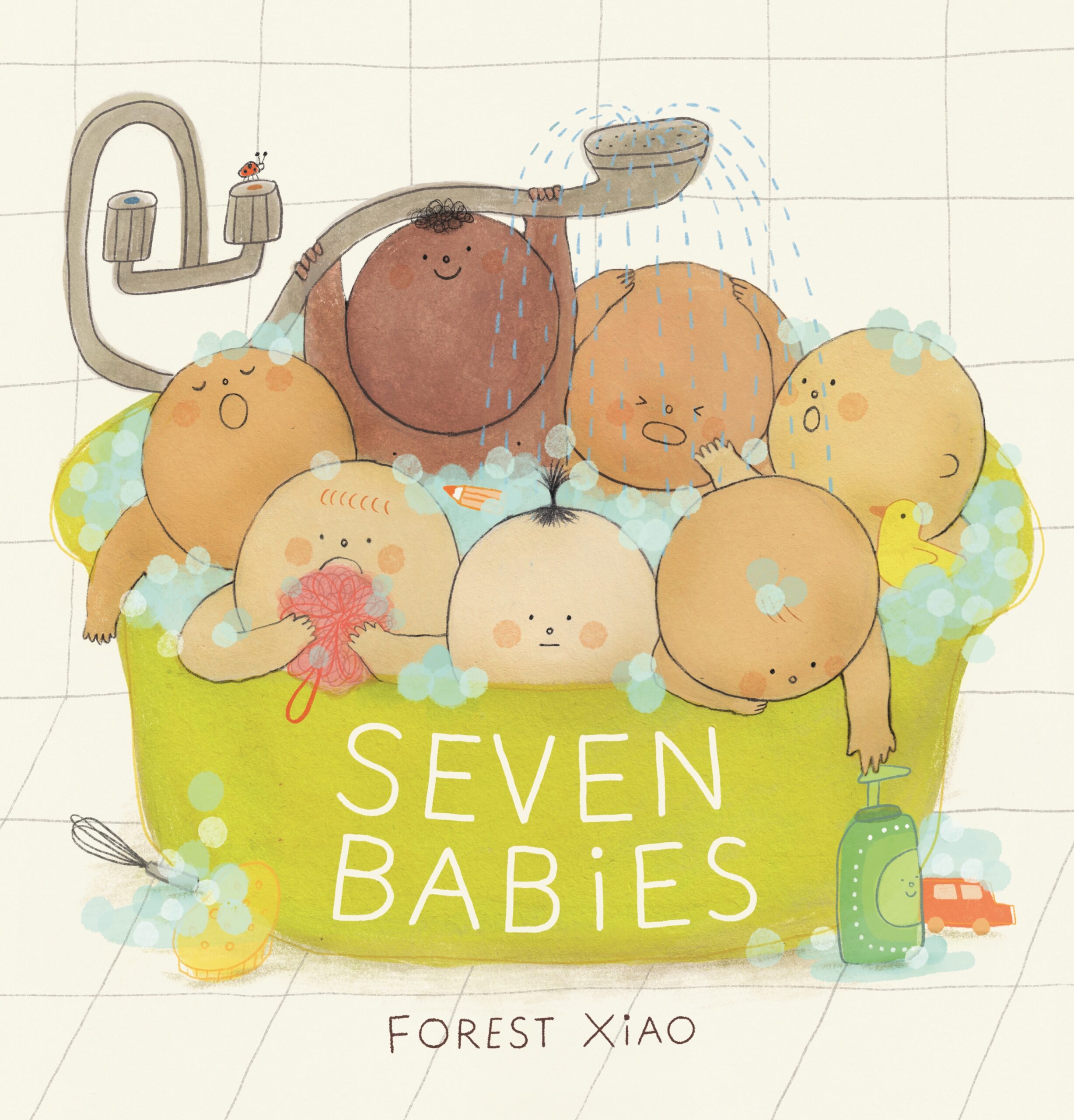
Seven Babies, written and illustrated by Forest Xiao
Seven Babies by Forest Xiao is one of six books on the shortlist for the 2026 Klaus Flugge Prize.
One Thursday morning, a box of seven babies arrives at a door … and chaos ensues! The Klaus Flugge Prize judges love the humour and freshness in Forest Xiao’s Seven Babies. They also admire the strong visual storytelling.
Former Klaus Flugge Prize judge, Senior Lecturer in Education: Primary English and Children's Literature, Oxford Brookes University, Mat Tobin interviewed Forest about her book.
Your journey into illustration is deeply international, having lived and worked across China, Germany, the United States, Malaysia, and the UK, alongside completing your BA in Graphic Design at Camberwell. How do you feel this exposure to such varied visual cultures, landscapes, and design traditions has shaped your personal aesthetic? Is there a particular country or environment that you feel left the deepest mark on the cozy, domestic world you built for Seven Babies?
Travelling while growing up and being exposed to different cultures and fields has made me quite flexible. I have learned to adapt to my surroundings and embrace limitations.
In developing my visual language, the environment shapes how I work. While working on Seven Babies, I was moving between countries. Time, space, and materials were limited. I had to use whatever I could find. Those limitations somehow created a new sense of freedom, liberating me from overthinking.
Looking back at my travel sketchbooks, an emerging theme seems to be everyday domestic life and ordinary, mundane moments. I'm also drawn to the vibrant colours of tropical Southeast Asia.
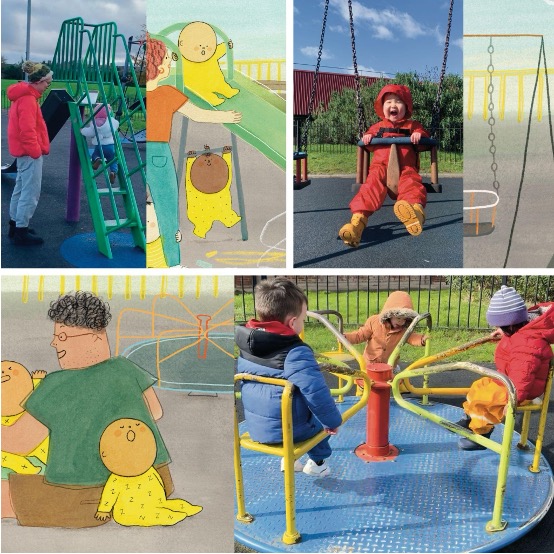
London has been my home for the past 13 years, where I studied design and illustration, got married, and became a parent. The world of Seven Babies is very much my own daily parenting life. Many things in the book, such as the sofa and the playground, are based on my real home and neighbourhood.
One of my favourite picture book makers is John Burningham. I love his humour, the ease of his artwork, the randomness, and the surreal quality of his storytelling. His work has been a great inspiration in the way I write and illustrate my own stories.

You graduated from the renowned MA in Children's Book Illustration at the Cambridge School of Art in 2023, where you were named a runner-up for the Sebastian Walker Prize. Can you tell us a bit about your time on that course? Was there a specific module, project, or breakthrough piece of feedback from a lecturer that directly unlocked the narrative voice or style for Seven Babies?
I loved my course, such a beautiful community of picturebook enthusiasts! I completed it over four years as a part-timer and had a baby halfway through.
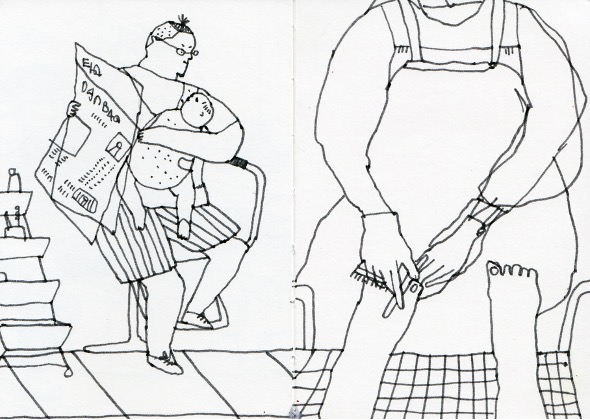
Becoming a parent has probably been the most significant part of my creative journey. Before then, I tended to overthink observational drawing. I would spend ages deciding what to draw and which materials to use. But after having my baby, all I could draw was my domestic life around baby-caring, and I had to choose the most effective tools for me: coloured pens.
The six-month break during the course gave me time to digest what I had learned, more space to reflect and grow as a creator. The lessons on observation and visual sequencing made much more sense when I returned to the course.
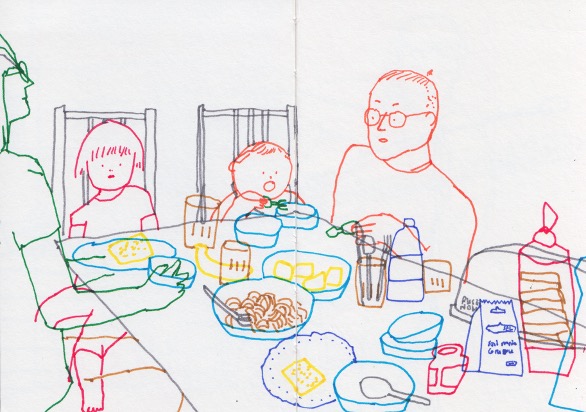
When I came back, I made a doodle of seven babies eating around a table, and one of my course mates said, ‘They all look like the same baby.’ That was a real ding! moment for me. I only had one baby, but it often felt as though I had a whole bunch of them taking over my home!
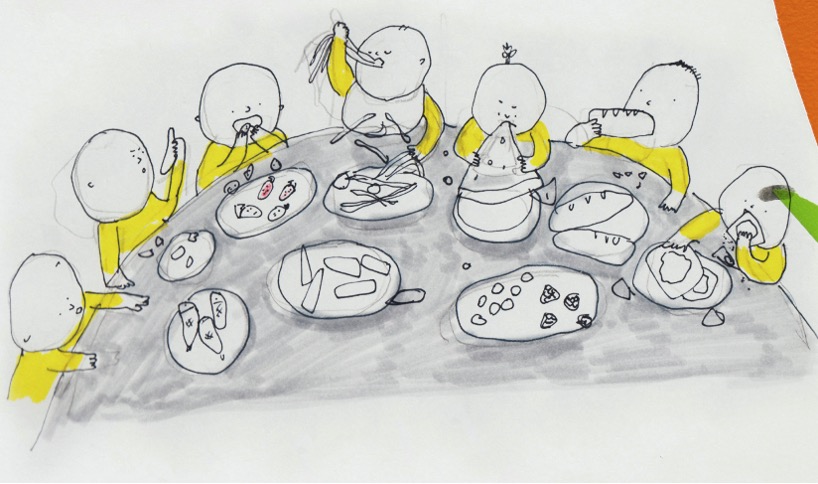
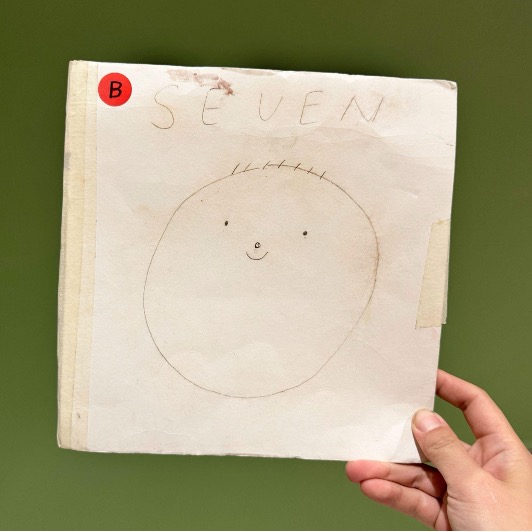
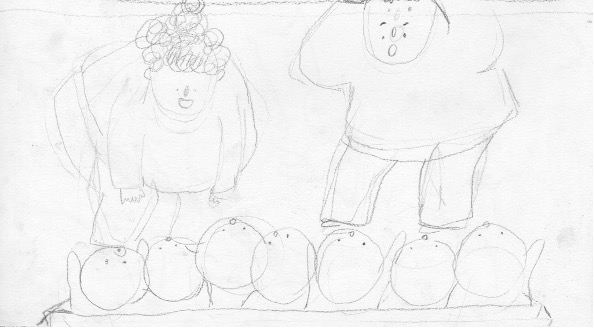
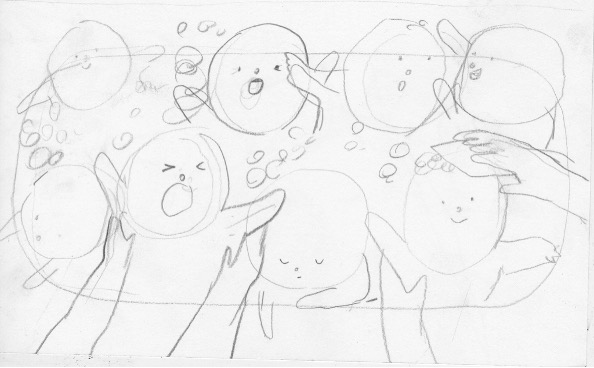
(early spreads layout)
So that was the birth of Seven Babies. However, I put the dummy book aside because I was not happy with the ending at the time, and it didn't make it into my final exhibition.
These babies were unstoppable, though. After being the runner-up for the Sebastian Walker Prize, I had the opportunity to visit Walker Studio. There, Deirdre from Walker Books spotted these babies hidden among my portfolio—and the rest is history!
One of the most brilliant design mechanics in the book is the use of colour restraint. The seven babies are all dressed in matching, vibrant yellow onesies, which act like a visual anchor, allowing the reader's eye to instantly track their chaotic tumbles across the softer, muted gouache background of the home. Did this specific colour strategy exist in your very first sketchbook concepts, or did it emerge later through collaborative design discussions with the team at Walker Books?
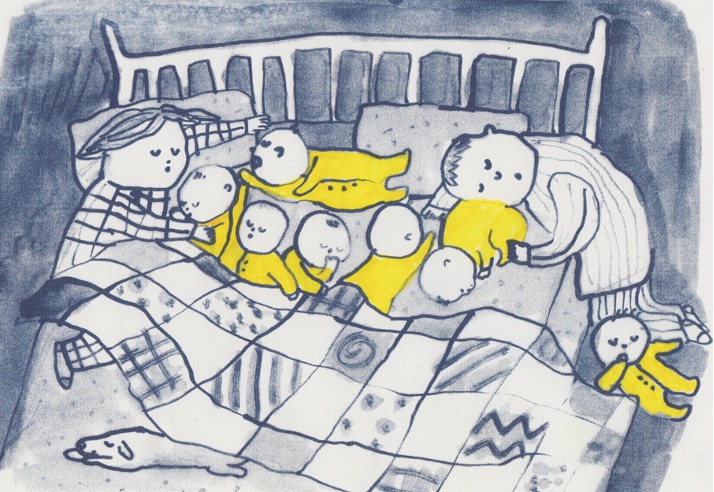
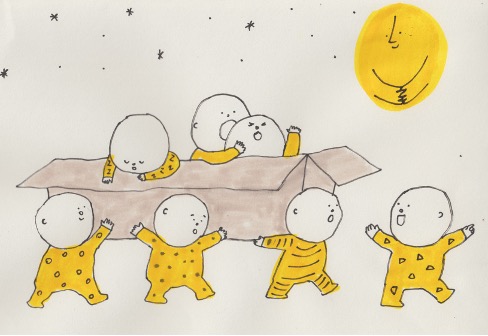
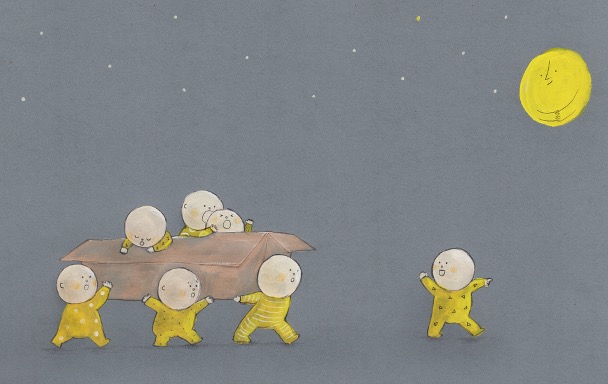
When the babies were rescued by Deirdre and Maria, they were only black-and-white sketches. So I developed the visual language with Walker Books when making the book together.
Here are some of the early stages of the artwork, where I experimented with different materials. You can see that the babies have been yellow from the very beginning! I didn't think too much about it at the time because yellow is simply my favourite colour.
Now, taking a closer look at the colour choice, I do think yellow feels very gender-neutral. It has the positivity of light—it's not too harsh, not too dark—and it's a lively colour that perfectly matches the energy of the seven babies.
Designing the seven babies and the dad came quite naturally, but the mum took a little longer. Just 50 hairstyles before I found the right haircut for her.

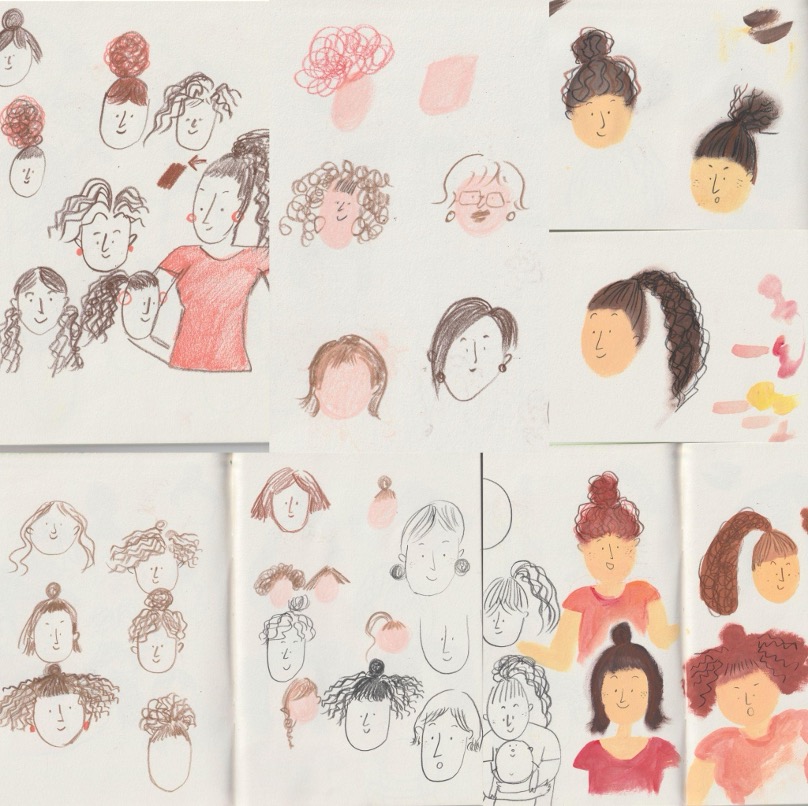
Drawing seven moving, independent characters on a single double-page spread without turning the layout into an unreadable mess is an immense structural challenge. How do you approach the composition of these busy spreads? Do you use a specific layout grid or position household objects (like sofas, laundry piles, or tables) to guide a child's reading path smoothly from left to right?
I think my background in graphic design, and my previous job designing children's books, has really shaped the way I think about composition. It's actually one of my favourite parts of making a picture book.
I always begin in my sketchbook, working through ideas with tiny thumbnail sketches. Quite often, the very first idea ends up being the final one. Many of the spreads in Seven Babies stayed quite close to those original thumbnails.
Here are the early sketches for the Neighbour spread and the Washing Machine spread.
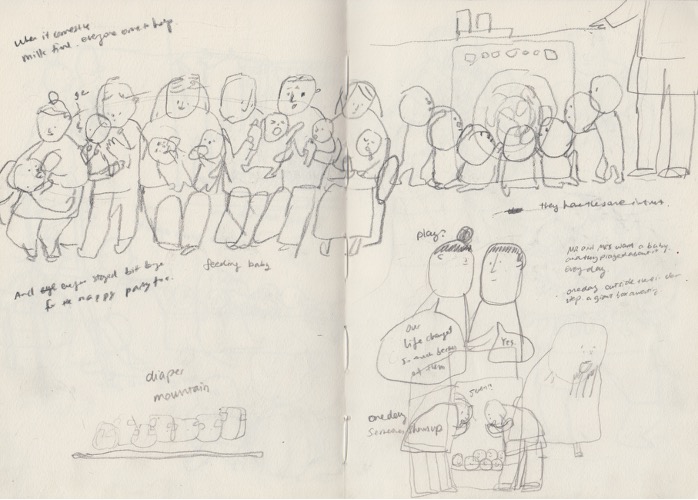
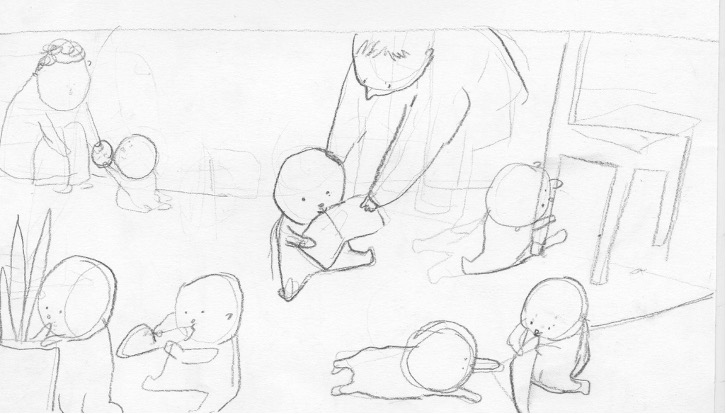
The busiest spread is probably the Living room spread. I started by coming up with lots of individual activities for the babies, then arranged them across the pages like puzzle pieces until I found the strongest composition.
My favourite spread is the washing machine spread. The composition was inspired by an earlier drawing I made called Dull Man Dough Watching Club. I loved its silliness and sense of drama, and I wanted to bring that same feeling into Seven Babies.
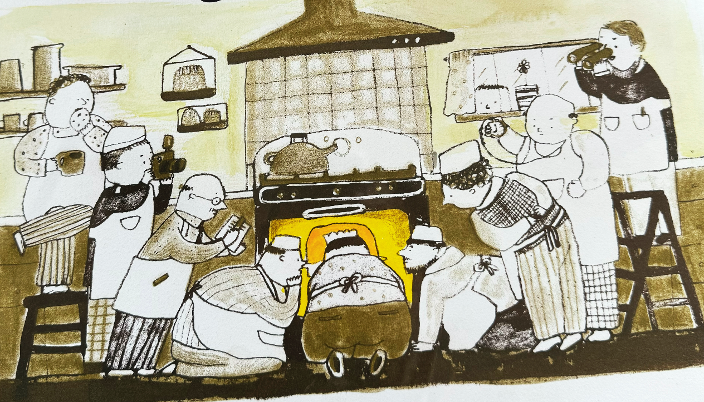
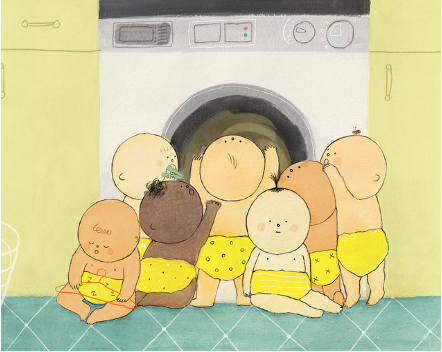
You’ve shared that your work is deeply rooted in your own experiences as a mother of two. One of the funniest, most relatable sequences in the book shows the babies completely hypnotised by the spinning laundry machine! How much of your daily sketchbook practice relies on catching these quick, real-life observations of children mid-motion? Were there any other real-life family anecdotes that you tried to sketch into the book but didn't quite make the final cut?
My sketchbooks from that time are full of babies - playgroups, children's centres, playgrounds, parks, and all sorts of kids' activities. They became like a visual database for me. By observing my baby 24/7, drawing the babies in Seven Babies came quite naturally. I'd say that about 90% of what they do in the book is inspired by real baby life.
Looking back at those sketchbooks now, I can also see how much they influenced the busy compositions in Seven Babies. Filling pages with observations of everyday family life really helped me create the lively, chaotic world of the seven babies.


One day, I spotted a childminder pushing a giant buggy that could hold four children. It gave me the idea of the couple pushing all seven babies in one extra-long buggy.
I also had another idea of all seven babies swinging together on one giant swing. In the end, neither idea made it into the final book. At least they get their moment in the spotlight here!
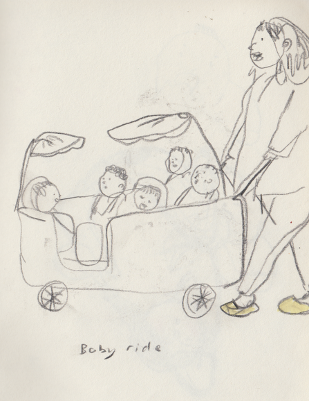
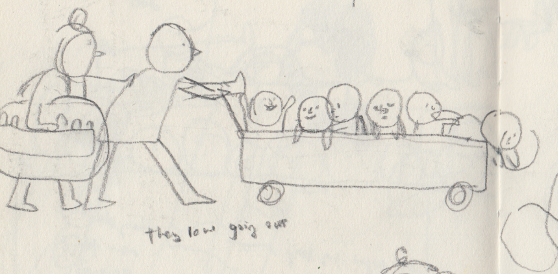

While the babies wear matching outfits, they are far from identical clones. If a reader looks closely, each infant possesses a highly specific personality communicated entirely through minor shifts in body language, head tilts, and facial expressions. How difficult was it to maintain these individual character tracks across the length of a 32-page book? Did you have names or specific behavioural descriptions for each of the seven in your studio notes?
Yes! At an early stage, I mapped out the different personalities of all seven babies and each had a different pattern on their bodysuit to reflect it.
- the can-sleep-anywhere baby
- the hungry, eats-everything baby
- the adventurous, curious baby
- the happy-go-lucky baby
- the dramatic crying baby
- the surprised baby
- and the staring-into-your-soul, nothing-will-ever-impress-me baby.
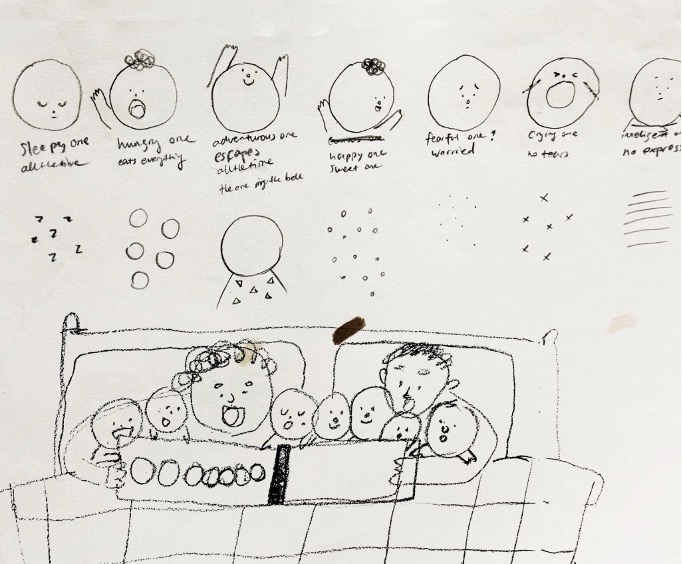
Once I had established their characters, drawing them became much easier because each baby naturally behaved differently, and their personas fed into how they interact with the environment and with each other. The hungry baby, of course, had to chew on something ridiculous, like a carpet. The sleepy baby had to doze off in the most unexpected places. The adventurous baby always had to be exploring something new. And the crying baby...what triggered that? These are pretty much my thought process for all the spreads.
In addition to the main narrative, you have subtly hidden a tiny ladybird family throughout the chaotic domestic scenes: these are downright gorgeous additions! What made you decide to include this secondary ‘search-and-find’ layer for younger readers? How do you balance hiding tiny details in a room without disrupting the macro pacing and flow of the main page-turns?
The tiny ladybird storyline was actually added towards the end when all the artwork was almost finished.
I was drawing the pebbles on the pavement on the first spread, then I added a few ladybirds. At that moment I had the idea: What if one of the ladybirds sneaked into the house as well?
One thing my tutors at Cambridge School of Art always taught us was that the words and the pictures should each be doing something different. So I thought it would be really fun to create a subtle visual storyline that isn't mentioned in the text at all. I love adding details that the readers might not notice the first time they read the book, but then discover it on a second or third reading.
But my little readers are so good at spotting them on the first read! Because kids don’t focus on the text, they are so observant of the images.
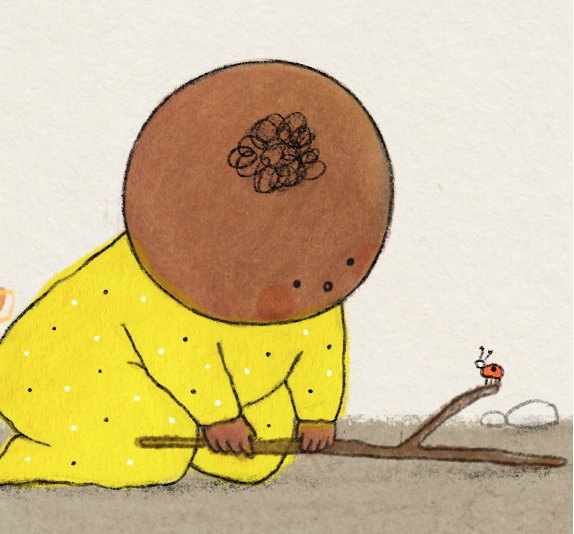
Can I ask for a tour of your workspace? I am always fascinated by where the magic happens. What do your physical surroundings look like, and what are the essential tools, brushes, or specific gouache pigments that you must have on your desk when you sit down to create?
I really wish I had a studio to show you! In the last few years my workspace has been the dining table, a random desk, or my mother-in-law's mahjong table. And my essential tools are simple: some watercolour paper, two small brushes, Caran d'Ache gouache, dark black pencils, a scanner, and my ipad.
I created most of the artwork while moving between Malaysia and UK, so I never had a dedicated space. The limitation simplified my process, usage of materials and influenced the visual language of Seven Babies.
Here are a few of my working spaces: the mahjong table on the left with a bedside lamp and a tidyish desk on the right after I cleaned it up a bit. Mostly I work in my pyjamas, among piles of random objects, papers and all sorts of family clutter and constant interruptions. Looking back, it feels quite fitting. The book is all about the ‘joyful’ chaos of family life, and it was created right in the middle of that same chaos.
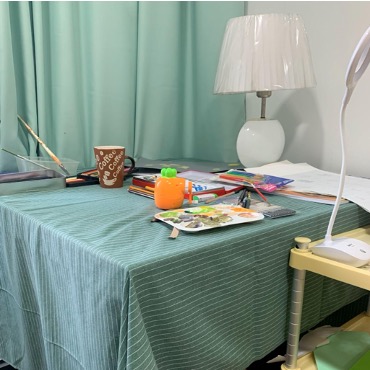
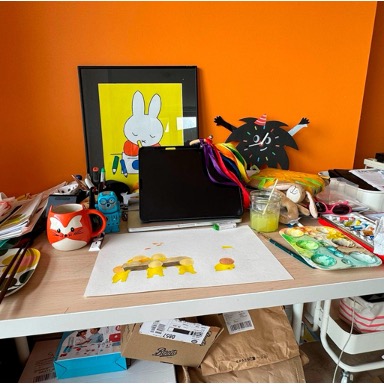
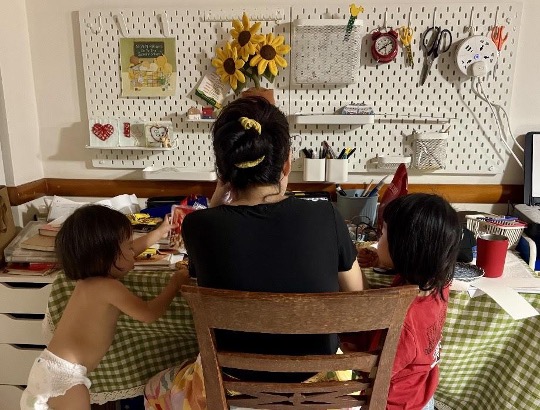
I am endlessly fascinated by hearing an illustrator talk us through the exact evolution of a single page from start to finish. Could you choose a favorite spread from Seven Babies and guide us through its entire journey—from the very first loose graphite gesture in your sketchbook, through color testing, to the final finished piece that we see in print?
I'm going to choose what was probably the most difficult spread in the whole book: the Neighbour spread. It went through the most complex evolution before finally arriving at the finished artwork.
Here's the very first thumbnail and rough sketch.
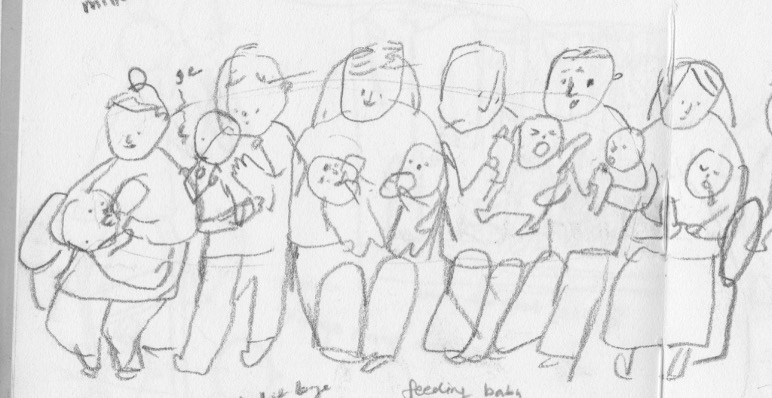
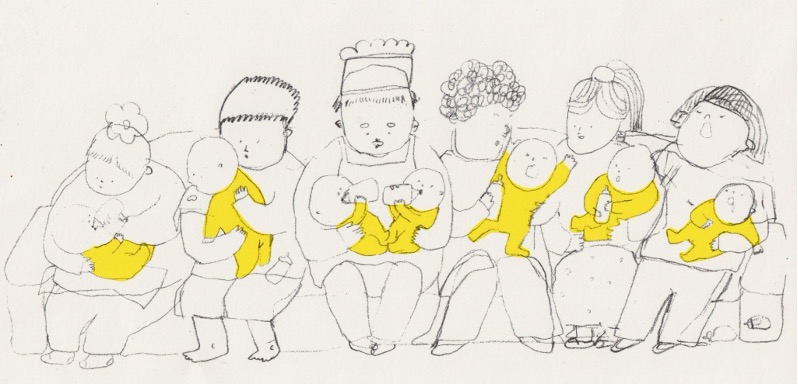
During the developmental stage, I even tried an animal version of the spread.
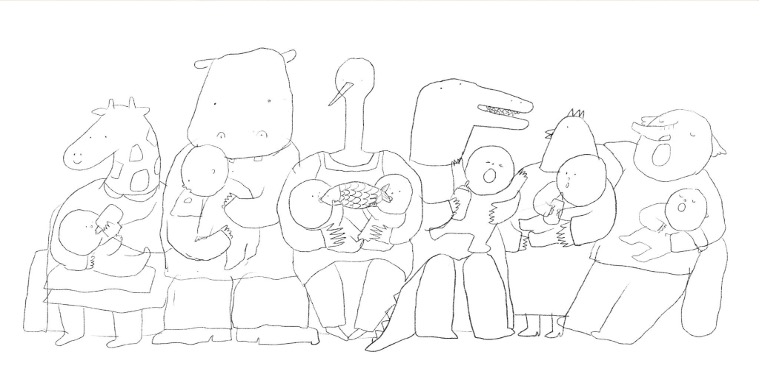
Then I went through several rounds of experimenting with colour palettes and different illustration styles. But we still hadn't found the right look.
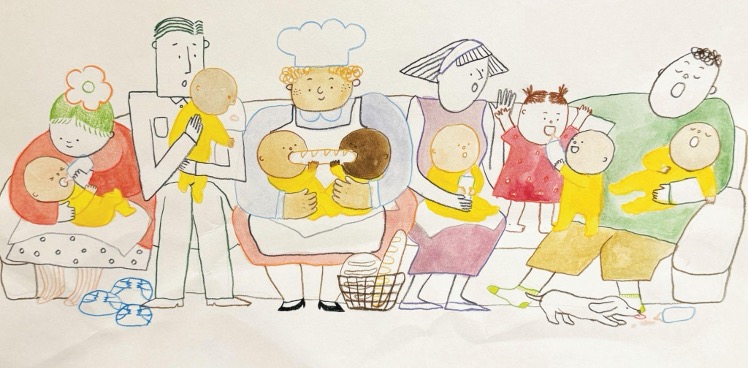
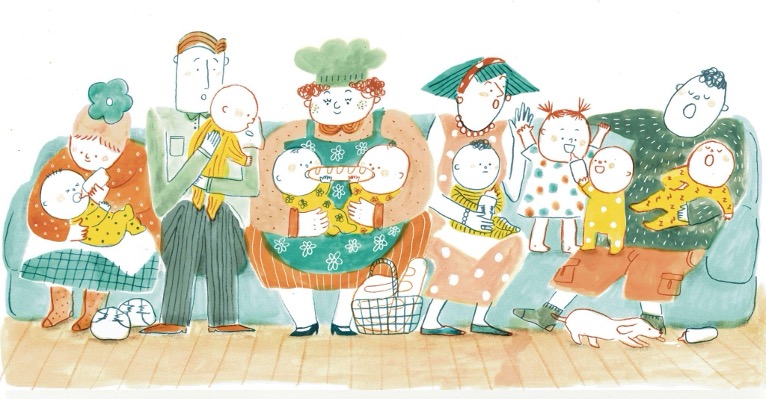
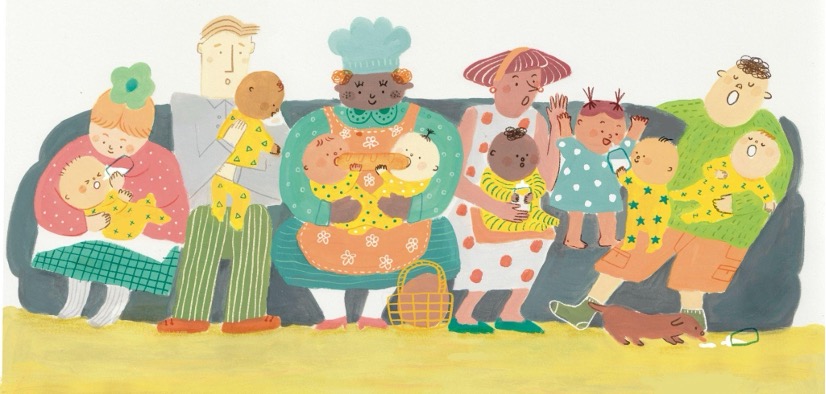
At that point, Deirdre and Maria suggested that I put the spread aside and work on the other spreads first. It was such good advice, because if you stare at the same piece for too long, it can start to feel overworked and lose its freshness.
So I moved on to some of the simpler spreads instead. By the time I came back to the Neighbour spread, the colour palette and visual language had naturally become much clearer through working on the rest of the book. And drawing the final version of this spread became much easier. And I named these neighbours using real names from my friends.
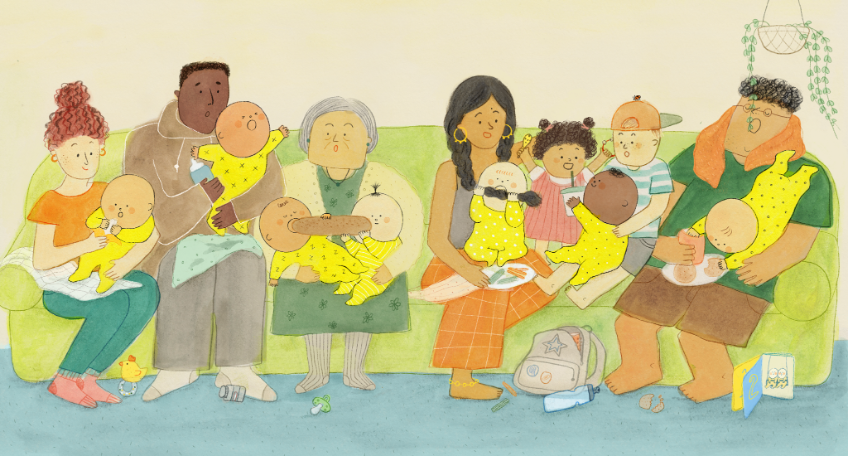
Lastly, what is next on the horizon for you? Now that Seven Babies is out in the world making children and parents laugh, are there any new ideas, characters, or future publishing projects currently brewing on your desk that you can share a little sneak peek of?
Since Seven Babies, I've published two board books, Yummy Yummy and How Many Babies, and I'm now working on the second Seven Babies picture book!
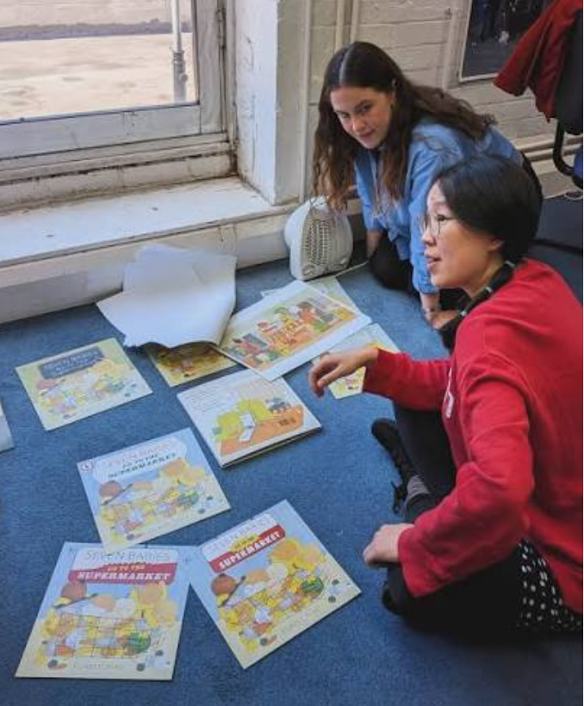
This is a photo of my recent visit at the Walker Books, If you look closely, all seven babies are squeezed into a shopping trolley. I think you can probably guess where they're heading next!
Seven Babies by Forest Xiao is published by Walker Books, 978-1529532807, £7.99 pbk.
The Klaus Flugge Prize is funded personally by Klaus Flugge and run independently of Andersen Press.
Website maintenance & Copyright © 2026 Andersen Press. All Rights Reserved. Privacy & Cookie Policy.